SHINE said it has received a conditional commitment for a loan of $263 million from the U.S. Department of Energy's (DOE) Office of Energy Dominance Financing (EDF).
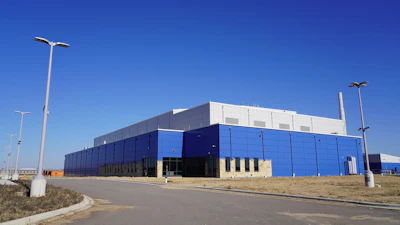
If approved, the financing will support the completion of Chrysalis, a medical isotope production facility that will use the company's fusion technology to support the first domestic commercial supply of molybdenum-99 (Mo-99).
The facility uses novel American-made fusion systems to produce Mo-99, a medical isotope used in more than 40,000 procedures daily to diagnose heart disease, cancer and other serious medical conditions. By establishing U.S. production capability, Chrysalis addresses a critical national security vulnerability while demonstrating American leadership in advanced nuclear systems.
"Chrysalis proves that fusion doesn't need to wait for future breakthroughs to create value for millions of people today," said Greg Piefer, founder and CEO of SHINE. "This conditional commitment is a critical catalyst that accelerates our scale-up of the world's largest medical isotope facility and ensures a secure, domestic source of critical medical isotopes. We are incredibly grateful to the Department of Energy's rigorous due diligence process and look forward to working to meet the conditions to move forward on the loan."
The United States currently relies on imports from Europe, South Africa and Australia for its Mo-99 supply. These imports are produced in venerable but aging research reactors that are nearing or at capacity. Mo-99 decays at about 1 percent per hour, so the U.S. loses roughly one-third of its volume and value during cross-continental transportation. Chrysalis will shore up global supply chains as the only new multi-million dose per year infrastructure expected in the next decade, eliminating logistical vulnerabilities while providing secure, reliable domestic supply.
SHINE's process uses fusion and a liquid uranium target that is recycled. This reduces both waste volume and operating costs.
Once fully operational, Chrysalis will be the largest medical isotope production facility in the world, demonstrating fusion technology at commercial scale. While primarily focused on Mo-99, the facility is designed to be a versatile source for other critical isotopes, including iodine-131, xenon-133 and many others.
Chrysalis will support approximately 200 construction jobs and 150 permanent operations positions.