Fujifilm Cellular Dynamics, the company’s segment that manufactures human-induced pluripotent stem cells (iPSCs), recently opened its new headquarters and iPSC development and manufacturing facility in Madison, Wisconsin.
The company said the new site is expected to quadruple the capacity for its iPSC-based research including its iCell products designed for developing and testing therapeutics that treat the brain and nervous system; heart and vascular; live; blood and immune; and ocular. The facility also expands Fujifilm’s footprint for contract manufacturing of cell therapy products, with enough capacity to eventually open a GMP facility and add more clean room suites.
“This new facility enables us to respond to growing demand from pharmaceutical companies, research institutions and academia engaged in new drug research and development, further delivering on our commitment to the development of life-changing medical treatments and to the people who will benefit from them,” said Toshihisa Iida, director, corporate vice president and general manager of the Life Sciences Strategy Headquarters and Bio CDMO Division at Fujifilm Japan, in a statement.
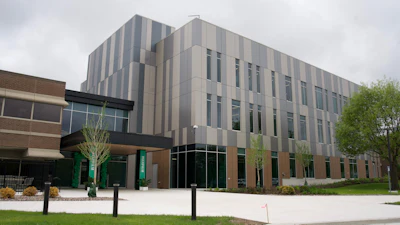
The new 175,000-square-foot building integrates cell culture manufacturing laboratories, process development laboratories and a center of excellence for gene editing to support both iPSC products and development services. It’s impressive given the building previously served as a John Deere Credit facility, essentially a “credit union for tractors,” according to Kyle Wallace, strategic planning coordinator at Fujifilm Cellular Dynamics.
He said his company built a laboratory tower into the middle of the two existing office buildings and then added a warehouse tower on the far end. It’s a major upgrade over the roughly 400-square-foot room the segment was running out of previously.
“It’s a great story, but it wasn’t very fun for a long time for the folks who were shipping 20 to 50 boxes a day out of a small room and having to do a lot of work in a small space,” said Wallace.
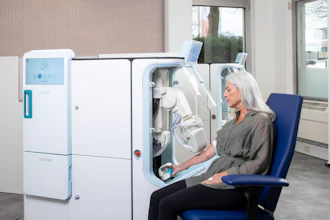
 FujiFilm's new facility includes several laboratory spaces.Medical Design & Development
As a contract development and manufacturing organization (CDMO), Fujifilm has leaned on its more than 15 years of stem cell research, expertise in episomal reprogramming, IP portfolio and in-house manufactured products to help clients. The company can perform work in a dedicated controlled lab or GMP manufacturing space; provide a raw material chain of custody and segregation; offer additional cleaning and disinfection services; handle new batch records for manufacturing and screening procedures; provide single cell seeding and imaging; and provide additional QC for on/off targets.
The facility is producing billions of stem cells but it avoids any of the bioethical issues around the technology since its stem cells are produced from a standard blood draw. Fujifilm’s tech also helps reduce animal testing at a time when regulatory guidance is trending more toward new approach methods (NAMs) in drug discovery.
“Cancer and a lot of other diseases have been cured in mice but it didn’t translate to humans. That can be really frustrating for pharma to invest money into a mouse model that on paper looks like it’s recapitulating the disease, but human biology is so much more complex than mouse biology. [It’s important] to have the ability to use human cells that are not from a primary source and to be able to harness the power of human biology and not waste any of that time on animal models,” Wallace said.