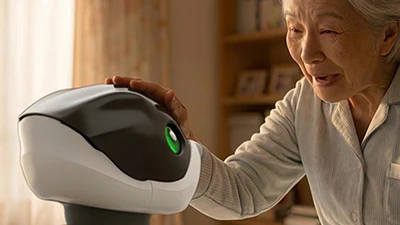
Kawasaki Heavy Industries has completed work on a new prototype, Home LEO, a social robot designed for the healthcare sector. The robot is designed to support elderly people living at home, leveraging physical AI to recognize its surroundings, make situational decisions and act autonomously.
The robot cat was developed to build a close bond with its owner, offering companionship through conversation, watching over them and assisting with daily activities. It also collects data on personal preferences and daily living, like food, clothing and housing, and uses this information in everyday interactions. The robot is 640 mm long, 675 mm tall and 390 mm wide—and about 830 mm tall when kneeling.
The data is shared with medical institutions and nursing facilities to make sure the patient receives appropriate care.
 Kawasaki's Home LEO prototype is a social robot for the healthcare sector.Kawasaki
Regional disparities in care, chronic shortages of healthcare professionals and care workers, and rising costs are creating a serious situation that individual medical institutions and nursing care facilities cannot resolve through their own improvement efforts. In light of these social changes, Kawasaki said it is necessary to extend the period during which the elderly can live safely and with peace of mind in their own homes. Longer periods of living at home increase elderly people's engagement in social activities and improve their quality of life, while also helping to curb social security spending on medical and nursing care.
Home LEO could curb Japan’s social security expenditures and reduce the psychological and physical burdens on the elderly and their families, while helping the elderly live the lives they desire.
The company will soon conduct a series of trials with the aim of launching Home LEO in fiscal 2028.
To date, Kawasaki has been expanding its healthcare solutions for medical institutions and nursing care facilities by leveraging the Kawasaki Heavy Industries Group's healthcare offerings, including the surgical robot system hinotori, the indoor delivery robot FORRO, the semi-humanoid robot Nyokkey and the indoor/outdoor location information service mapxus Driven by Kawasaki.
How Home Leo Works:
- Communication Tailored to Each Individual: Through daily conversations and watching over users, Home LEO gathers and understands each person's lifestyle habits and preferences.
- Supporting a Safe and Secure Life at Home: Home LEO watches over daily life, noticing various unusual situations such as falls, changes in physical condition, fire hazards left unattended and visitors at the door. It prompts the user directly while also coordinating with family members and care professionals.
 Home LEO can open doors. Kawasaki
- Healthcare Platform: Home LEO securely records everyday data such as conversations, daily routines and general wellness information. With the user's consent and under appropriate information management, this care data is shared with and coordinated among medical institutions and nursing care facilities, linking hospitals, nursing care, and the home to help deliver seamless care.

What's in a Name?
The name is based on the core concept of the elderly staying connected with the familiar home they love:
- L: Linking Life: Connecting people and robots
- E: Empowering You: The power to advance your daily life
- O: Optimizing: Making everyday life smarter
 Home LEO watches over daily life, noticing unusual situations like falls.Kawasaki