The drive to pack more functionality into ever-smaller devices is fundamentally reshaping the medtech landscape. Across the industry, there is a well-recognized trend toward miniaturization and the need for personalization, supported by relentless technological development. This evolution is expanding the range of applications for existing devices, advancing technologies for implants and diagnostics, and transforming solutions for drug delivery, surgical tools, and more.
Whether a device is held in a surgeon’s hand or operated by a robotic end effector, engineering teams must achieve exceptionally tight tolerances, as patients are highly sensitive to the intrusion of large medical instruments, making precision paramount. However, precision must be balanced with the ability to design biocompatible products that require fewer assembly steps, mitigating risk while controlling production costs.
As modern medical devices become increasingly complex, healthcare-acquired infections (HAI) persist as a primary concern during the design process. Single-use instruments effectively reduce the risk of HAI, yet many complex medical devices are designed for repeated use, necessitating rigorous cleaning, sterilization, and disinfection protocols. To meet these competing demands, the industry requires manufacturing solutions that deliver both absolute accuracy and agile development capabilities. This is specifically where micro-precision 3D printing emerges as a transformative solution, delivering the ultra-high resolution and design freedom required to engineer innovative medical devices where conventional techniques fall short.
 Boston Micro Fabrication
Take, for example, the modern endoscope - a vital diagnostic tool consisting of a flexible tube equipped with a light and camera. Endoscopes allow doctors to inspect a patient’s gastrointestinal (GI) tract or ears, nose, and throat (ENT) and serve as a prime illustration of the immense challenges inherent in miniaturization. Because these anatomical sites carry high bacterial content, the risk of patient infection is significant, driving the need for sophisticated, highly precise components. To navigate the human body safely, the cameras and light sources for endoscopy must be exceptionally small. Endoscopes used in gastroenterology now approach less than 7 mm in diameter, while instruments for cardiovascular use feature diameters near 1 mm. As these devices shrink, the time and complexity required to assemble them increase exponentially. By reducing the number of assembly steps, manufacturers can cut cycle times significantly.
Overcoming Traditional Manufacturing Constraints
Traditionally, engineers have relied on micro injection molding or CNC machining to produce very small, intricate parts. However, these methods often present substantial bottlenecks. Tooling turnaround times can span months, and the associated costs are high, particularly during the iterative prototyping phase.
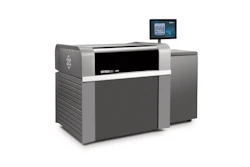
While 3D printing bypasses the need for costly tooling, many conventional systems fail to produce small parts with the tight tolerances and high resolution required for medical applications. Fused deposition modelling (FDM) produces low-precision parts, while two-photon polymerization (TPP) achieves high precision but is too slow for rapid, scalable production. Projection Micro Stereolithography (PμSL) technology addresses this disparity. Boston Micro Fabrication’s (BMF) PμSL platforms print micro-scale parts rapidly using biomedical plastics, achieving 2 μm resolution and +/- 10 μm accuracy at scale. This capability liberates designers ‘s from the constraints of traditional manufacturing, such as maintaining uniform wall thickness and draft angles, allowing them to optimize component functionality fully.
Micro 3D Printing in Practice: From Concept to Clinical Reality
In real-world medtech environments, the practical impact of micro 3D printing technology overcomes the challenges and constraints faced by companies at the forefront of medical device development. For instance, when BMF customer RNDR Medical – a team specializing in advanced medical devices including endoscopy, urology, and cardiology devices - sought to bring a novel single-use ureteroscope to market, they encountered stringent demands on size, performance, and engineering precision. The device’s microscale distal tip needed to accommodate a high-definition camera, illumination, and irrigation channels, all sealed within a mere 3.30 mm-diameter profile. Traditionally, these features would have required intricate, high-cost micro molding, significantly slowing down the development process. By leveraging BMF’s micro-precision 3D printing, RNDR Medical accelerated its iteration cycles, moving from design to refined product in days instead of months. The geometric accuracy and material integrity of the 3D-printed parts allowed the distal tips to successfully withstand pre-clinical evaluation in a simulated use environment, cutting overall development time by half.
Similar breakthroughs in development speed and product precision are being seen by other innovators in the sector, another example of which is Sutrue, a company focused on minimally invasive surgical instrumentation. Confronted with the costly and time-intensive realities of machining critical components for their automated suturing device, Sutrue turned to micro 3D printing for a smarter solution. BMF’s micro-precision technology enabled the team to produce multiple design variations quickly, experimenting with fine details and tolerances until they identified the perfect fit for their device. According to Sutrue’s team, this rapid prototyping was instrumental in translating their design intent into fully functional prototypes, and ultimately into a novel surgical tool that could advance through development much more efficiently than with legacy manufacturing approaches. Fundamentally, the precision at such small scales delivered by BMF was the key to transforming their initial concept into a clinical reality.
 Boston Micro Fabrication
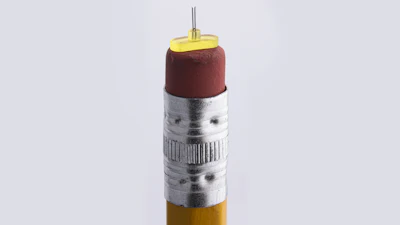
Beyond instrumentation, the broader versatility of micro-precision 3D printing is also enabling transformative progress in therapeutic devices. IMcoMET, an emerging biotech company specializing in cancer immunotherapy, has pioneered a new approach using microfluidics and microneedles to manipulate the tumor microenvironment. The effectiveness of their system relies heavily on the ability to manufacture caps and lids that accurately hold and align needles only 20-40 µm apart – requirements not achievable with standard SLA or mass production methods. Micro-precision 3D printing technology bridged this crucial gap, providing IMcoMET not just with the miniaturization they needed, but also the requisite materials and tolerances to enable a commercially viable device.
High-Precision Manufacturing for the Next Generation of Medical Devices
With medical device engineers constantly challenged to integrate more features into smaller spaces, the ongoing demand for highly functional disposable catheters, advanced diagnostics, and minimally invasive delivery systems necessitates scalable, high-precision manufacturing. By enabling highly tailored, feature-rich devices that exceed the limitations of traditional processes, micro-precision 3D printing – exemplified by technologies like PµSL – continues to meet the challenge as it positions itself as an enabler of next-generation medtech.
Ultimately, the growing adoption of additive manufacturing in this space is not simply about efficiency or cost; it’s about empowering engineers to tackle previously insurmountable challenges, connect iterative design with production, and accelerate the realization of improved patient outcomes.
Carl Leonard is Application Development Engineer at Boston Micro Fabrication, the global leader in micro-precision 3D printing, delivering advanced manufacturing solutions for applications that demand micron-level resolution, accuracy, and precision.