As the data center boom continues to grow, manufacturers and infrastructure suppliers are wondering how long demand can realistically remain strong. In this Q&A with Manufacturing.net, three executives from companies that have recently made significant investments related to the market explain how they see the market evolving, where long-term opportunities could emerge and how they are preparing for fluid demand.
The insights come from Velocity Group CEO Jorge Xacur, Zayo Chief Technology Officer Troy Lupe and Eaton President of Electrical Sector (Americas) Mike Yelton.
Responses have been edited for length and clarity.
Nolan Beilstein (NB): How long does your company Jorge Xacur, CEO, Velocity Groupexpect data center demand to remain strong?
Jorge Xacur: We expect this demand to remain at current levels for at least the next 10 years, driven not only by AI, but also cloud computing and the continued growth of digital infrastructure. I do not think it will be a straight line, but it is definitely a trend and not a short-lived surge.
Troy Lupe: We expect data center and network capacity demand to remain strong through 2030 and beyond. AI is not just creating more traffic but also changing where compute is located, Troy Lupe, Chief Technology Officer, Zayowhich markets need to be connected and how much capacity those connections require. Our research projects AI-related capacity demand could increase two to six times by 2030, with long-haul fiber demand growing about 35% annually. More importantly, we are already seeing it in what customers are buying. Our2026 Bandwidth Report found long-haul dark fiber demand doubled year over year, with dark fiber demand increasing by as much as 20 times in some AI-driven metro markets.
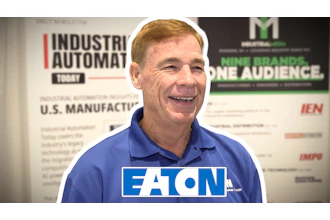
NB: What long-term MRO opportunities do you see in the data center market?Mike Yelton, President of Electrical Sector (Americas), Eaton
Mike Yelton: Whether it's a utility, commercial building, industrial facility or data center, customers need reliable power and are continually investing in upgrades and modernization to improve performance, efficiency and resilience. Those investments don't end once a facility is built. They continue throughout the lifecycle of the infrastructure.
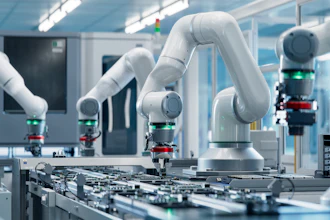
Jorge Xacur of Velocity Group: For Velocity, the long-term opportunity is to manufacture components and assemblies for power-distribution, cooling and networking. For example, molded housings, structural components, connectors, electromechanical assemblies and heat-pump subassemblies.
There is a lot of engineering effort being directed at making data centers more environmentally sustainable, creating new and more efficient cooling and power distribution systems, for example.
NB: How is your company preparing for evolving demand?
Jorge Xacur of Velocity Group: We are deliberately investing in flexible manufacturing capabilities rather than equipment dedicated exclusively to one market or product. Our large-tonnage injection molding, vertical insert molding and overmolding, precision machining, electronics manufacturing and assembly capabilities can serve medical device, industrial, aerospace and other demanding applications.
If data center growth eventually moderates, we can redeploy capacity across those markets without fundamentally rebuilding our manufacturing platform. We view a future moderation in new data center construction as a change in the mix of work, not as an end to the opportunity.
Troy Lupeof Zayo: We don’t build on speculation. We build against real customer requirements, and we design that infrastructure with an eye toward what comes next.
Fiber networks are long-lived assets and the most difficult and expensive part is often the initial construction. So, when we build a new route, we use the demand data we have today, along with our view of where compute, data centers and power are moving to determine the right conduit package and physical infrastructure. That gives us the ability to add fiber capacity later as additional demand materializes without having to recreate the entire construction effort.
The goal isn’t to perfectly predict demand market by market. It’s to build the right physical foundation so we can respond quickly as demand evolves.
 Jorge Xacur, CEO, Velocity Group
 Jorge Xacur, CEO, Velocity Group
 Troy Lupe, Chief Technology Officer, Zayo
 Mike Yelton, President of Electrical Sector (Americas), Eaton