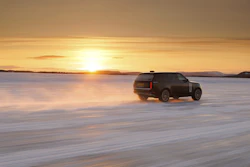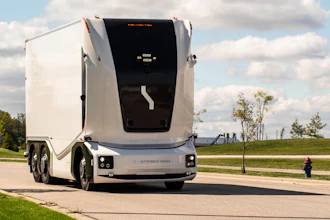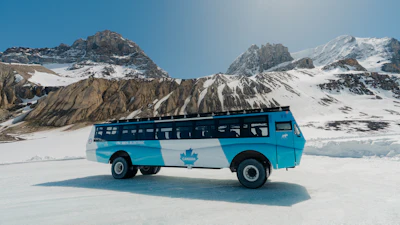
Pursuit Attractions and Hospitality launched the world’s first electric Ice Explorer as part of the Columbia Icefield Adventure in Jasper National Park, Alberta.
The vehicle is now operating as part of the regular fleet on the Athabasca Glacier, charging through onboard bifacial solar panels and regenerative braking.
“The Columbia Icefield is one of the most significant places where we operate and how we show up here matters,” said Stuart Back, Chief Operating Officer, Pursuit Banff Jasper Collection. “Starting with one vehicle is intentional. It allows us to deepen guest connection, learn in real-world conditions, and apply those learnings thoughtfully over time. This is what it looks like to put our Promise to Place into practice.”
Built from the ground up in partnership with Noble Northern, a Manitoba-based provider of heavy-duty electric vehicle conversions, the Electric Ice Explorer is the world’s first electrified Ice Explorer designed to operate on glacial terrain. The redesigned frame is more than 50% lighter than the original and integrates bifacial solar panels, regenerative braking, and advanced safety systems designed for glacial conditions – including geofencing technology that automatically manages speed and applies braking in designated areas of the glacier.
The Electric Ice Explorer builds on a series of fleet and facility innovations and represents the next step in reducing emissions on the glacier. Pursuit has fully refurbished 10 of its Ice Explorers, upgrading six with EPA Tier 3 engines and four with EPA Tier 4 engines, significantly reducing nitrogen oxide emissions. Pursuit also replaced its diesel generator system at the Columbia Icefield with propane, reducing the facility's carbon footprint by more than 30%. Based on modeled comparisons, the Electric Ice Explorer takes that progression further, with the potential to reduce 200 to 300 kilograms of CO₂ per day compared to a diesel Ice Explorer operating on the same route.
The pilot will help determine whether electrification can play a larger role in the future of glacier access at the Columbia Icefield.
“We rebuilt this vehicle from the chassis up to be as light and efficient as possible while meeting the demands of glacial terrain,” said Tye Noble, President of Noble Northern, whose team led the engineering and construction of the vehicle. “Five years ago, you wouldn’t have considered six kilowatts of solar to be a possibility on a vehicle like this. That’s what makes this pilot so valuable: the technology is ready to be tested in one of the most demanding operating environments in the world.”
The Columbia Icefield Adventure is open for the 2026 season.