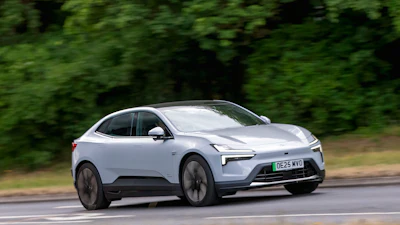
Polestar is increasing its strategic focus on Europe, which currently represents close to 80% of the company’s retail sales volumes, by continuing to expand its sales network and preparing to localize the manufacturing of future models.
This follows a decision from the U.S. Department of Commerce’s Bureau of Industry and Security to not grant Polestar an authorization under the current Connected Vehicle Rule to sell vehicles in the U.S. from model year 2027 onwards.
The company will continue to sell existing stock of Polestar 3 and Polestar 4 in the U.S. and will continue to support customers, including providing access to its service network.
Some 94% of Polestar’s retail sales volumes in the first quarter of 2026 originated from markets outside the U.S.
Michael Lohscheller, Polestar CEO, said, “The automotive industry is entering a new phase, based on regional dynamics. Our strategy reflects that, with Europe being our largest growth engine and our plan to manufacture Polestar 7 in Europe. Our record sales in 2025 and the first quarter of 2026 show that we are making strong progress, with several new market launches taking place in Europe this year. In addition, we will continue to invest in markets where we have opportunities to continue to grow, like Southeast Asia, Eastern Europe, Latin America and Canada.”
“Polestar continues to challenge bigger, more established players thanks to our impressive cars and growing model line-up. Polestar 5 has received incredible feedback from the global media, with customer deliveries set to start during the summer. A new variant of our global bestseller, Polestar 4, is planned for the second half of this year, followed by the all-new Polestar 2 in 2027, and thereafter the Polestar 7 compact SUV.”