Automated driving is often framed as a software-led transformation, but hardware limitations have equally constrained its progress. From sensor performance to compute architecture, each stage of development has required trade-offs between accuracy, latency, cost and safety.
Understanding these constraints is critical to evaluating both the current state and future trajectory of autonomous vehicle systems.
The Evolution of Hardware and Its Persistent Constraints
The hardware stack for automated driving has evolved rapidly, integrating cameras, lidar, radar and high-performance computing platforms into tightly coupled systems. Despite major advancements, the timeline toward full autonomy has been inconsistent.
While early projections anticipated rapid progress toward Level 5 systems, most real-world deployments remain limited to Level 4 or lower, often within controlled environments.
Key Hardware Complications in the Development Timeline
The progression of automated driving hardware has been marked by both innovation and a series of persistent engineering bottlenecks that have slowed deployment timelines. These complications span sensing, computation and system integration, each introducing unique constraints that affect performance, safety and scalability.
1. Sensor Reliability
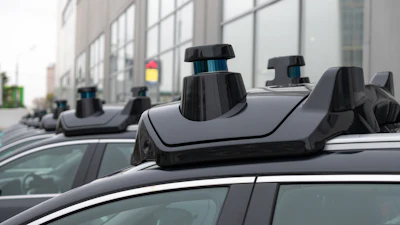
This remains one of the most critical challenges. Each sensing modality has inherent limitations. Cameras struggle in low-light conditions, radar lacks resolution and lidar performance can degrade in adverse weather. Environmental factors, such as rain and fog, negatively affect sensors’ performance, increasing the risk of perception errors.
2. Failures in Perception Hardware
Hardware failures are particularly problematic because the accuracy of perception systems is fundamental to the safety of autonomous vehicles. False or inconsistent object detections can propagate through the perception-planning-control loop, triggering unsafe behaviors such as incorrect braking or delayed responses to real hazards.
These failures are not always isolated events. Their temporal consistency can amplify their impact, creating sustained system-level risks even when individual components seem to function correctly.
3. Computational Hardware
The high computational demands of automated driving systems pose challenges for energy consumption and costs. Autonomous vehicles rely on sensors, control systems, computing units, communication protocols and networking hardware to perceive their environment and support real-time decision-making. All this contributes to increased energy use.
Additionally, factors such as higher vehicle weight and drag can further raise energy consumption compared to human-driven vehicles. These constraints complicate integration into commercial vehicles and limit scalability.
Why These Challenges Are Difficult to Overcome
Autonomous vehicles must operate in dynamic environments with incomplete and uncertain data, making it difficult to design hardware that performs reliably across all scenarios. Early development efforts already reflected these limitations.
For example, the 2016 General Motors self-driving test vehicle relied on technologies such as cameras, radar systems, lidar sensors and cellular and GPS antennas. However, the test was conducted with a human driver who could intervene if necessary, underscoring the challenges of achieving fully reliable hardware for unsupervised operation.
Hardware must support perception, decision-making and control within milliseconds, leaving little margin for error. Achieving this level of performance while maintaining efficiency and affordability requires balancing competing design priorities across multiple engineering domains. A lack of updated government regulations and industry standardization also slows progress.
Emerging Solutions and Future Directions
To address current challenges, engineers are advancing sensor-fusion and redundancy techniques to improve reliability and fault tolerance. By combining multiple sensing modalities and implementing robust validation mechanisms, systems can better handle failures of individual components. Multisensor fusion significantly improves perception accuracy in adverse conditions.
Specialized computing hardware is also playing a key role in addressing current limitations. Ongoing research initiatives emphasize the need to develop computing platforms that can deliver high computational performance while operating within strict vehicle constraints, such as power, weight and thermal limits.
Efforts are specifically focused on improving energy efficiency alongside processing capability to make automated driving systems viable for real-world deployment.
The Road to Scalable Hardware for Automated Driving
Hardware challenges have significantly shaped the timeline of automated driving, introducing constraints that extend beyond performance into safety, cost and scalability. While these issues remain difficult due to real-world complexity and system interdependencies, ongoing innovations in sensing, computation and system design are gradually addressing key limitations.
Progress will depend on aligning hardware advancements with software capabilities and regulatory frameworks to enable reliable and scalable autonomous systems.
Oscar Collins is the editor-in-chief of Modded and runs his own auto tech blog, The Gearhead Guide. He has bylines on Auto News, Gizmodo and Global Trade Mag. Oscar Collins