In a historic first, Manju Bangalore and Priya Abiram are slated to lead the first dedicated research mission to study menstruation in microgravity aboard a 2027 suborbital spaceflight with Virgin Galactic.
The OP-01 mission, which is part of a broader research initiative through Operation Period’s Redshift Lab, represents the first dedicated effort to directly study menstrual health in space, addressing a long-overlooked gap in human spaceflight and reproductive health research. The flight is expected to take place in 2027, with Bangalore and Abiram leading research designed to better understand how menstrual dynamics function beyond Earth.
While more than 750 people have traveled to space, over 100 of which have been women, and decades of research have explored the effects of microgravity on the human body, menstruation has never been directly and quantitatively studied in space. Until now.
“This mission is about more than a scientific first, it’s about correcting a fundamental design gap,” said Bangalore. “Human spaceflight has historically been built around a narrow definition of the human body. We are working to expand that definition and ensure that future space exploration reflects the full diversity of human experience.”
“This is a meaningful moment for this research to be taking place. By studying menstruation in microgravity, we have the opportunity to potentially unlock insights for astronauts, as well as help inform future biomedical research on Earth, from reproductive science to chronic conditions that remain under-researched and under-funded," Abiram said.
As emerging voices at the forefront of reproductive health and space innovation, Bangalore and Abiram have built their work around a central question: what happens when systems are designed without accounting for half the population? Their leadership on this mission reflects a broader commitment to redefining how science, research, and exploration are approached in the future.
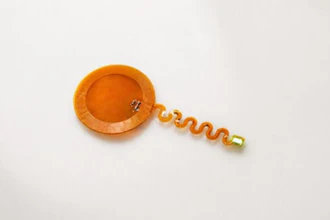
The research conducted during the mission is expected to focus on menstrual fluid dynamics and menstrual product performance, with potential applications for long-duration spaceflight as well as broader medical innovation. Findings may inform clinical counseling, as well as assist medical systems and resourcing for mission planning on future spaceflights.
The initiative builds on growing global momentum to close gender gaps in science and medicine, particularly in areas where biological differences have historically been overlooked in research and design.
“At Virgin Galactic, we are committed to enabling human-tended research that expands the scope of what can be studied in space,” said Amber Favaregh, director of System Analysis & Research at Virgin Galactic. “This mission with Operation Period is a powerful example of how Virgin Galactic can continue to support real-time, in-flight scientific investigation into long-overlooked areas of human health, helping advance more inclusive and innovative exploration that delivers insight for both space and life on Earth.”
In addition to its scientific objectives, the OP-01 mission aims to spark a broader cultural and educational conversation around menstrual justice, representation in STEM, and the future of human-centered design in space exploration.
Bangalore and Abiram, who bring backgrounds spanning science, research, and advocacy, have emerged as leading voices at the intersection of menstrual health and space innovation. Through this mission, they seek not only to advance research, but to redefine who space exploration is for.
Further details on the mission timeline, research payloads, and additional collaborators will be announced in the coming months.
This mission is being built for community, by community, and has been made possible by generous support from Family Foundations, individual donors, and community members. Join us in making history. Donations are tax-deductible and can be made here: operationperiod.org/op-01