Electromagnetic (EM) sensors are emerging as the silent powerhouses behind next-generation brain-connected medical devices. EM microcoils, resonant probes, and sensor arrays are reshaping neural care—from minimally invasive brain-computer interfaces (BCIs) to intelligent diagnostic implants.
Medtech leaders must rethink EM sensors—not as niche components but as transformative tools that enable real-time neural mapping, precision diagnostics, and closed-loop cognitive therapies.
But innovation at this level isn't easy. Scaling EM sensor technologies for clinical use requires cross-disciplinary collaboration to overcome complex challenges. This article explores EM sensors as the backbone of next-generation neurotechnology and outlines five core challenges that must be solved to deliver scalable, sustainable brain-computer interface systems.
EM Sensors: The Edge of a Neurotech Revolution
We're on the brink of a neurotech revolution, with demand for EM-powered BCIs accelerating toward a market projected to reach $400 billion by 2030 (Forbes/Morgan Stanley).
It's not just advancing neurostimulation. We're connecting neural interfaces to data platforms and creating an ecosystem for a new frontier of medicine.
Imagine a 2035 with:
- Wireless, sub-millimeter accurate, MRI-compatible implants guiding treatment for stroke, epilepsy, depression, and brain injuries
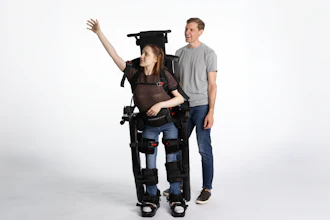
- Wireless data relays for implanted electrodes – devices that could one day help those with motor impairments think, then walk
- Technologies that not only track location, but communicate, in real-time, with the brain itself
These are lifesaving, life-enhancing breakthroughs, but how do we bridge the gap between current capabilities and the next generation of EM-powered systems that are not just clinically viable, but also manufacturable, scalable, and commercially sustainable?
5 Core Challenges of EM Sensor Design for BCIs
1. Power Efficiency
In a perfect world, EM sensor-based BCIs would wirelessly transmit high-fidelity neural data for years – without overheating, failing, or needing to recharge. To achieve that vision, engineers must balance a design "triangle" of dwell time, rich data, and power consumption:
- Dwell time is how long a sensor can safely stay implanted without removal or recharge
- Rich data requires high bandwidth and signal integrity
- Wireless data transmission through tissue demands substantial power
But here's the bottleneck: you can only optimize for two. Increase power to improve data quality, and you risk reducing dwell time. Reduce power to extend dwell time, and data quality suffers.
Engineers must either solve the bottleneck or accept—and account for—trade–offs from the start. You can't design the "perfect" sensor and hope to solve power problems later.
This challenge underscores the need for early alignment across R&D, design, and manufacturing. Power efficiency isn't a patch; it's a foundational design parameter.
2. Miniaturization and Multifunctionality
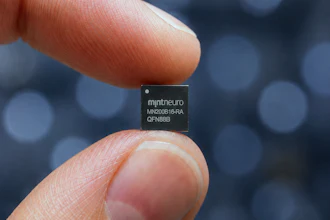
We've already miniaturized coils for surgical robots, pacemakers, percutaneous needles, and other precision medical devices. In neurotech, EM sensor miniaturization isn't simply a convenience; it's a capability. The smaller the sensor, the more performance and versatility we can unlock.
But miniaturization has limits. At a certain point, smaller means hard to manufacture, more fragile, or weaker signals. These are physical constraints that must be addressed.
At the same time, sensors with multiple functions provide greater clinical and commercial value. Implants that can simultaneously sense, communicate, and adapt in real-time offer a higher return on surgical footprint, power budget, and capital investment.
Think of a single catheter replacing three, like atrial ablation catheters that also measure oxygen and temperature: less hardware, yet more insight.
Looking ahead, we envision EM sensors that don't operate in isolation, but as intelligent networks. Rather than siloed data—one sensor, one signal—multiple sensors will integrate data to provide a holistic view of an individual's health.
3. Depth and Sensitivity
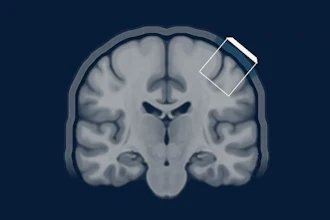
The deeper we integrate sensors into the brain, the richer and more precise the neural data they can capture. But greater depth also introduces sensitivity tradeoffs—and risk.
Sensors can only be placed so deep before signal integrity degrades (due to tissue interference) and safety concerns increase. Sensor placement and sensitivity must be carefully balanced to maintain data quality without compromising patient safety.
These are mission-critical challenges that must be solved before we can confidently place EM sensors deeper into the brain.
4. Biocompatibility
As with all implanted devices, biocompatibility is crucial for EM sensors in BCI applications. This is paramount: EM sensors cannot create problems. They exist to solve them.
True biocompatibility means avoiding heating, inflammation, and degradation while also transmitting data-rich wireless signals. Lower power consumption extends dwell time, which is critical for devices that stay implanted for years. No one wants annual brain implant replacements.
Another consideration is EMI shielding. As sensors become more sensitive, they also become more vulnerable to interference – from the body, the environment, and other devices. Proper shielding ensures data integrity.
5. Team and Technology Alignment
Cross-disciplinary collaboration between sensor designers, materials scientists, clinical innovators, and manufacturing experts is essential – yet competition often hampers collaboration that would benefit everyone.
Roadmaps must reflect clinical realities and manufacturability. Is the solution usable, scalable, and viable in real-world settings? Are data standards established to ensure interoperability across systems and platforms?
Too often, startups and OEMs build prototypes in isolation, without considering how—or if—they can scale. CDMOs that house manufacturing expertise are consulted too late. When you design in a silo, you're not truly innovating—you're guessing.
Cross-functional teams must align early. Startups and OEMs don't need to do everything in-house. Strategic partnerships can save years of development time and millions in investment.
Benefits of early collaboration include:
- Solving shared challenges
- De-risking R&D
- Accelerating time to market and clinical adoption
In the decade ahead, EM sensors won't just power devices. They'll power human possibility. It's not science fiction. It's engineering, and it's already underway.
Now is the time for designers, scientists, innovators, and manufacturers to bridge the gap between bold ideas and clinical reality. It will require investment – in validation, design innovation, and R&D – but the payoff will be enormous: better patient outcomes, faster adoption, and competitive advantages.
It will also require partnerships. If medtech leaders collaborate to solve these challenges, the benefits will ripple across the entire industry. Tomorrow's neurotech leaders will be those who partnered smart—and partnered early.
 Sam Puent is product development engineering manager at Forj Medical.
Forj develops custom tools, automation, and systems within its unified engineering and manufacturing model.
Mike Springer is a MedTech strategist with deep expertise in medical technology, including BCIs.  Mike Springer is a MedTech strategist with deep expertise in medical technology.