SARASOTA, FL — U.S. manufacturers and foreign investors announced 247,000 manufacturing jobs through reshoring and foreign direct investment (FDI) in 2025, according to the Reshoring Initiative 2025 Annual Report. The report combines 2025 investment data with findings from the 2026 USA Reshoring Survey and 2026 H1 data, providing an early view of how manufacturer activity, priorities and challenges are evolving.
The 2025 result was nearly level with 2024 and demonstrated the resilience of reshoring despite tariff uncertainty, high U.S. manufacturing costs and skilled workforce shortages.
More than 2.3 million manufacturing jobs have now been announced through reshoring and FDI from 2010 to 2025. The first million took nearly a decade to accumulate. However, manufacturers have announced more than 1.3 million in the past five years as they placed greater value on supply chain resilience, reduced geopolitical risk, proximity to customers and supportive industrial policy.
Momentum has strengthened considerably in 2026. Based on first-half announcements, the Reshoring Initiative projects approximately 309,000 jobs for the year—about 25% more than in 2025—and cumulative announcements since 2010 of approximately 2.7 million. A further surge in July, August and September suggests the 2026 total could reach 400,000.
Of 64 conditional reshoring and FDI announcements identified during 2025, 14 had converted, in part or in full, into confirmed manufacturing projects by mid-2026. Further investment will depend partly on greater stability and predictability in tariffs and industrial policy.
Transportation and high-tech manufacturing lead
Transportation equipment led 2025 job announcements, replacing battery production at the top of the rankings, while pharmaceutical investment accelerated.
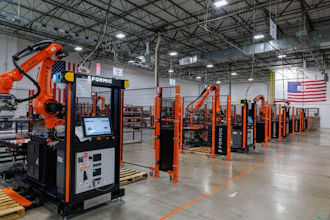
High- and medium-high-technology products accounted for 90% of reshoring and FDI job announcements, up from 88% in 2024 and the highest share recorded. Automation, robotics and artificial intelligence are helping manufacturers address labor shortages, improve productivity and narrow the domestic cost gap.
Tariffs drive action and uncertainty
Tariffs strengthened the case for domestic production in 2025 but also delayed some investments as companies awaited greater policy clarity.
Other leading drivers included geopolitical risk, supply-chain resilience, proximity to customers, skilled-worker availability, and freight and duty savings. Continued progress will require predictable industrial policy, a larger skilled workforce and improved domestic cost competitiveness.
Momentum is growing
The new survey reinforces the annual data and points to a new wave of U.S. manufacturing growth. More original equipment manufacturers reported reshoring activity, while the share of contract manufacturers quoting reshoring projects roughly doubled from 16% to 33%.
Policy uncertainty remained the leading concern, cited by 57% of respondents, and skilled-worker shortages continued to constrain growth. Use of total cost of ownership analysis among OEMs rose from 30% in 2025 to 40% in 2026, signaling broader recognition of the costs and risks often excluded from purchase-price comparisons.
“With smarter cost analysis, sustained investment in automation and workforce development, and a stable national industrial policy, manufacturers can turn today’s momentum into stronger supply chains, globally competitive factories and millions of well-paying American jobs,” said Harry Moser, president of the Reshoring Initiative.
Founded in 2010, the Reshoring Initiative helps manufacturers assess the total cost of offshoring and identify opportunities to produce and source more goods in the U.S.