The AI conversation largely focuses on digital copilots and white collar productivity. Meanwhile, physical AI gains ground in the energy, resources and industrials (ER&I) sector.
According to Deloitte's 2026 State of AI in the Enterprise report, 72% of ER&I companies already use physical AI to some extent, with adoption expected to reach 91% within two years.
Manufacturing.net spoke with Deloitte U.S. Head of AI Jim Rowan to discuss how the technology provides real-world value, improves safety in high-risk environments and helps companies build more resilient operations.
Manufacturing.net (Mnet): What are the most compelling examples you’ve seen of physical AI providing real-world value to manufacturers?
Jim Rowan (JR): We're seeing examples of physical AI across industries, such as simulation-driven remote operations and workforce training, allowing teams to test scenarios, optimize processes and build skills in virtual environments before deploying changes in the field.
In sectors such as chemicals and industrial products, companies are seeing significant productivity gains by automating handoffs between production stages, creating more connected, intelligent and resilient operations. What makes these use cases especially powerful is that they combine physical AI with smart manufacturing capabilities to unlock greater agility, safety, improve productivity and create more resilient operations in an increasingly complex manufacturing landscape.
Mnet: What makes physical AI and manufacturing a compatible combination?
JR: While traditional robots follow set instructions, physical AI systems perceive their environment, learn from experience and adapt their behavior based on real-time data and changing conditions.
There are also clear business cases for physical AI with manufacturers under pressure to boost productivity, address workforce challenges and build more resilient operations. As a result, interest in physical AI is accelerating, with nearly one-quarter of manufacturers planning to adopt it within the next two years, more than doubling current usage levels (2026 Manufacturing Industry Outlook).
Mnet: What do companies get wrong when implementing this technology in their operations?
JR: The biggest mistake is treating physical AI as a technology deployment rather than an enterprise transformation. Only a quarter of organizations have moved 40% or more of their AI experiments into production to date, largely because many focus on the model or robot itself while underestimating the foundations needed to scale, such as governance, workforce readiness, data quality and workflow redesign. The organizations seeing the greatest impact redesign how work gets done, align deployments to clear business outcomes and embed AI into core operations, rather than simply layering AI into existing processes.
Companies also often test physical AI in controlled environments without adequately validating how they will perform in complex, real-world operating conditions.
Mnet: How are these solutions already changing safety in high-risk environments?
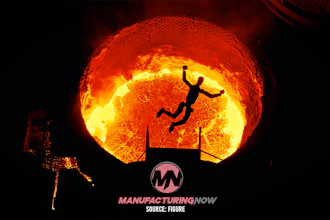
JR: By moving workers farther from hazardous tasks while giving organizations greater visibility into risk across their operations. Robots and autonomous systems can perform tasks in environments that may be dangerous due to heat, toxicity, confined spaces or other operational hazards. At the same time, AI-powered monitoring systems can continuously assess equipment health, environmental conditions and safety risks, helping organizations identify issues before they become incidents.
Rather than simply responding to problems, these systems can detect anomalies, forecast potential failures, alert personnel and, in some cases, initiate corrective actions.
Mnet: If physical adoption in the energy, resources and industrials (ER&I) sector reaches 91%, what will the most successful companies be doing differently?
JR: The most successful companies will treat physical AI as a core business transformation, embedding it into operating models, decision-making and cross-functional workflows. Thus far, organizations that have generated the most value from AI have redesigned processes around the technology and aligned deployments to clear business outcomes such as productivity, safety, resilience and asset performance.
This also requires investing heavily in the foundations that enable responsible adoption: strong governance, high-quality data, clear accountability and workforce development. The companies furthest along also understand that AI works best when it augments human expertise and will equip employees to supervise, challenge and collaborate with increasingly autonomous systems, while using AI to capture institutional knowledge, improve safety and strengthen decision-making across the organization.