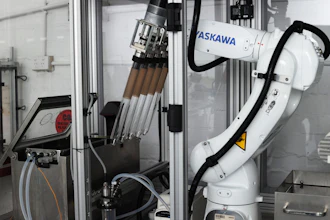
JLL’s Workforce Preferences Barometer research on The Forgotten Workforce revealed that frontline workers — including factory and lab warehouse workers, retail and healthcare employees, bank branch staff and lab and education personnel — reported consistently lower satisfaction.
High-performing frontline environments include factors that go beyond operational efficiency. The research pointed to five key recommendations:
Designing infrastructure that supports flexible scheduling
Prioritizing physical environment upgrades, including ergonomic zones and acoustic solutions
Integrating wellbeing infrastructure into operational design
Creating AI-ready learning environments
Developing spaces that foster managerial empowerment
"The workplace remains a key tool to both engage and attract top talent, especially as it relates to employee expectations,” JLL Executive Managing Director Peter Miscovich said. "Employers that smartly invest in workplace design and fit outs that promote wellbeing can create high-performance work environments that will support all employees – from new members of the workforce to more tenured employees – further promoting long-term talent attraction, retention and future business growth.”
The frontline reality: excellence in service, gaps in engagement
The research showed 72% of frontline workers reported that their workplaces support productivity and 70% said it helps them serve customers, patients or students effectively. However, only 38% said they are very happy with their workplace compared to 42% of office workers.
"While frontline workers feel perfectly supported to deliver productivity and customer service, we found fundamental misalignments between the design of their workplace and frontline worker’s more fundamental needs,” JLL Research Director Flore Pradère said. "These workers consistently put a lower score on the human-centered aspects of their workplace like socialization, cultural immersion, inspiration and professional development, all key drivers of job satisfaction.”
Time over place: the flexibility imperative
With one in three frontline workers operating outside standard working hours, schedule flexibility has become critical for work-life balance. The research revealed a disconnect: 47% of frontline workers want flexible scheduling, but access to this benefit across different sectors is uneven.
"Business leaders have an opportunity to rethink the role of the workplace and how it fits into employees’ lives,” JLL Global COO Paul Morgan said. "The answer lies in creating adaptive workplaces that support diverse needs, from flexible arrangements to connection-rich environments where emerging talent can build relationships and accelerate their growth.”
Burnout-retention paradox
Perhaps most concerning, the research identified significant engagement challenges among frontline workers. Nearly half do not consider their company a great place to work compared to only 38% of office workers, and 44% report burnout versus 39% of office workers. Yet, they do not intend to leave more than their office counterparts: 22% of frontline workers could consider leaving within the next 12 months.
"The burnout-retention paradox we’re seeing suggests that despite higher stress levels, frontline workers may have fewer options to change their circumstances, making it even more critical for employers to address workplace satisfaction proactively,” Pradère said. "Those experiencing high burnout feel significantly less empowered and more isolated than their peers.”
AI training gaps
The research also revealed a significant technology divide, with only 52% of frontline workers having access to AI training compared to 70% of office workers. This gap represents both a challenge and an opportunity for employers looking to future-proof their workforce.
"Investment in upskilling and reskilling is essential for maintaining a future-ready workforce,” Morgan said. "Frontline workers may see AI as a threat rather than an empowerment tool, highlighting the urgent need for training programs that address frontline-specific applications.”
Looking forward
The research emphasized that successful workplace strategies must embrace granular, place-of-work-specific approaches, treating each segment as a unique intersection of operational requirements, professional identity and human needs.
"Understanding these nuanced workforce differences becomes both a competitive advantage and an operational necessity,” Miscovich added. "As automation advances and human workers remain essential even in highly automated operations, talent retention and operational excellence increasingly depend on creating environments where every professional can perform and thrive in their specific role and context.”
Click here to see the full report.