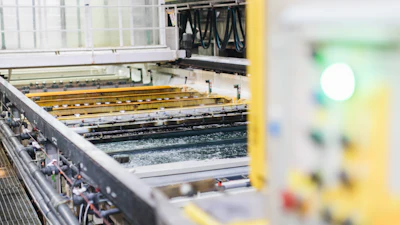
In the surface finishing world, success is often attributed to high-performance chemistry, precision equipment and exacting process control. Yet the technology quietly enabling it all is surface pretreatment. Without thorough and appropriate cleaning and activation, or de-passivation, even the most advanced plating baths are destined to fail. Much like a building requires a strong foundation, the plating process relies on well-executed surface preparation.
As materials evolve and manufacturing challenges grow more complex, the need for modern, adaptable pretreatment systems has never been more vital. Cleaning is no longer a static procedure or simplistic step. It is a dynamic, variable-dependent process requiring ongoing attention. Surface preparation has adapted to meet new demands and remains an essential cornerstone of finishing success.
Cleaning: A Moving Target, Not a Static Step
The misconception persists that surfaces are either cleaned or left untreated, but real-world surface conditioning is far more complex. Factors such as substrate material, surface profile, residual machining lubricants and water quality influence cleaning effectiveness. The rise of complex materials and coatings further amplifies this variability.
Cleaning once meant basic alkaline washes or solvent dips and are now shaped by a host of modern realities: the use of advanced synthetic fluids, tighter tolerances, higher performance demands for adhesion and corrosion resistance and increasingly strict environmental regulations. The cost of water and chemicals continues to rise and the complexity of parts, geometrically and metallurgically, makes cleaning increasingly more challenging.
This landscape means manufacturers across industries can no longer rely on legacy systems or inert pretreatment processes. Cleaning chemistry and process parameters must evolve in step with materials and end-use expectations. Regular review, optimization and adaptation are essential to maintain performance.
One Size Rarely Fits All
Pretreatment is highly base-material-specific. Different materials demand different approaches, and cleaning systems must reflect this variability to be effective. Aluminum, for example, typically requires a more rigorous pretreatment sequence than steel, often involving etching, deoxidation, desmutting and one or more zincating steps before it becomes suitable for plating. Steel, by contrast, can often be readied with a more straightforward cleaning and activation process with half the processing stages.
This disparity presents a challenge for facilities running mixed-substrate lines. Applying a universal process across all materials frequently leads to inconsistent finishes, weak adhesion and higher rework rates. A system optimized for one material may leave residues or oxides on another, undermining the entire plating line and risking product quality.
The success of any pretreatment line depends on how well it balances flexibility with precision. Chemistries must be carefully selected to suit the materials at hand, and process design should provide a buffer against unpredictability, whether in substrate condition, soil load or part geometry.
The Cost of Getting It Wrong
The consequences of poor pretreatment are widespread and costly. Adhesion failures, uneven deposits and premature corrosion often trace back to insufficient surface cleaning or activation. Residual oils, oxides and particulate matter can compromise the plated layer, leading to blistering, flaking or delamination. Worse, contaminated parts may introduce foreign material into subsequent process tanks, degrading chemical performance and triggering a cascade of downstream issues.
These failures are not just technical, they’re economic. Rework, rejected parts and extended troubleshooting cycles increase labor and material costs and as throughput suffers, customer confidence wanes and margins shrink. For manufacturers in highly regulated sectors such as aerospace, automotive or medical devices, the stakes are even higher. Surface preparation deficiencies can directly jeopardize compliance and reliability. In fact, many plating failure investigations trace the root cause to pretreatment, not the plating electrolyte.
Emerging Solutions and Smarter Systems
In response to rising challenges, pretreatment technologies have seen significant advancements. One major trend is the adoption of low-temperature cleaning systems. Formulated with modern surfactants and builders, these cleaners are designed to perform at reduced temperatures, lowering energy costs and lessening environmental impact without sacrificing cleaning performance.
Ultrasonic agitation has also become more prevalent, especially for intricate or porous parts. Rather than relying on mechanical abrasion, ultrasonic energy removes contaminants from hard-to-reach surfaces with greater precision and consistency.
Closed-loop and intelligent cleaning systems represent another leap forward. These systems monitor variables such as pH, conductivity and contamination levels in real time, enabling predictive maintenance and optimized chemical usage. By minimizing waste and improving process control, they support higher throughput and better environmental stewardship.
These emerging technologies, coupled with tailored cleaners and activators for magnesium, titanium and other specialized alloys, are now allowing applicators to process exotic materials with greater confidence and consistency.
Merging Best Practices with Innovation
Innovations in chemistry and equipment are only part of the equation. Industry leaders looking to fully capitalize on these advancements must integrate them into a system of best practices rooted in routine evaluation and adjustment. Four core principles guide this effort.
First is proactive assessment. Understanding the soil load on incoming parts is essential, and testing is required to understand whether the current system is optimized to manage the interferents. Simple cleaning tests like the water-break test can be used to verify that parts are fully clean before moving into plating.
Second is bath monitoring. Over time, cleaners degrade and soil build-up affects performance. Periodic titrations or conductivity measurements help determine when baths need refreshing or replacement. For high-volume or high-risk operations, real-time monitoring is increasingly feasible and cost-effective.
Third is rinse quality. Poor rinsing can pollute other cleaning stages that are conditioned to perform specific functions without any hindrances, like foreign soils improperly removed in previous stages, including the rinse stages. Measuring total dissolved solids and maintaining proper flow rates can significantly reduce this risk.
Fourth is documentation. Every process change, part type or chemical adjustment should be recorded. Reviewing standard operating procedures regularly ensures consistency and compliance, especially as personnel, parts or chemistries change.
The Foundation Beneath the Finish
Surface conditioning is the foundation of every successful plating line. A well-cleaned part supports strong adhesion, consistent deposition and long-term durability. It also protects the integrity of downstream processes, preserving the performance of high-cost tanks and minimizing waste.
Neglecting pretreatment doesn’t just affect individual parts; it can compromise entire systems. An inadequately cleaned part may introduce contaminants into successive baths, forcing even well-optimized stages to operate inefficiently. The result is a compounding problem that reveals itself in the most expensive and critical stage: the plating tank. Here, the true costs, energy, labor, chemicals and downtime become painfully clear.
In contrast, investing in pretreatment through smarter chemistry, thoughtful process design and regular auditing pays dividends in quality, efficiency and peace of mind.
The next time you admire a flawless plated component, remember: its brilliance didn’t begin in the plating bath. It began in the first tank, with a commitment to getting the surface right.
Adam Blakeley is Regional Product Manager at MacDermid Enthone Industrial Solutions. For more information, visit macdermidenthone.com